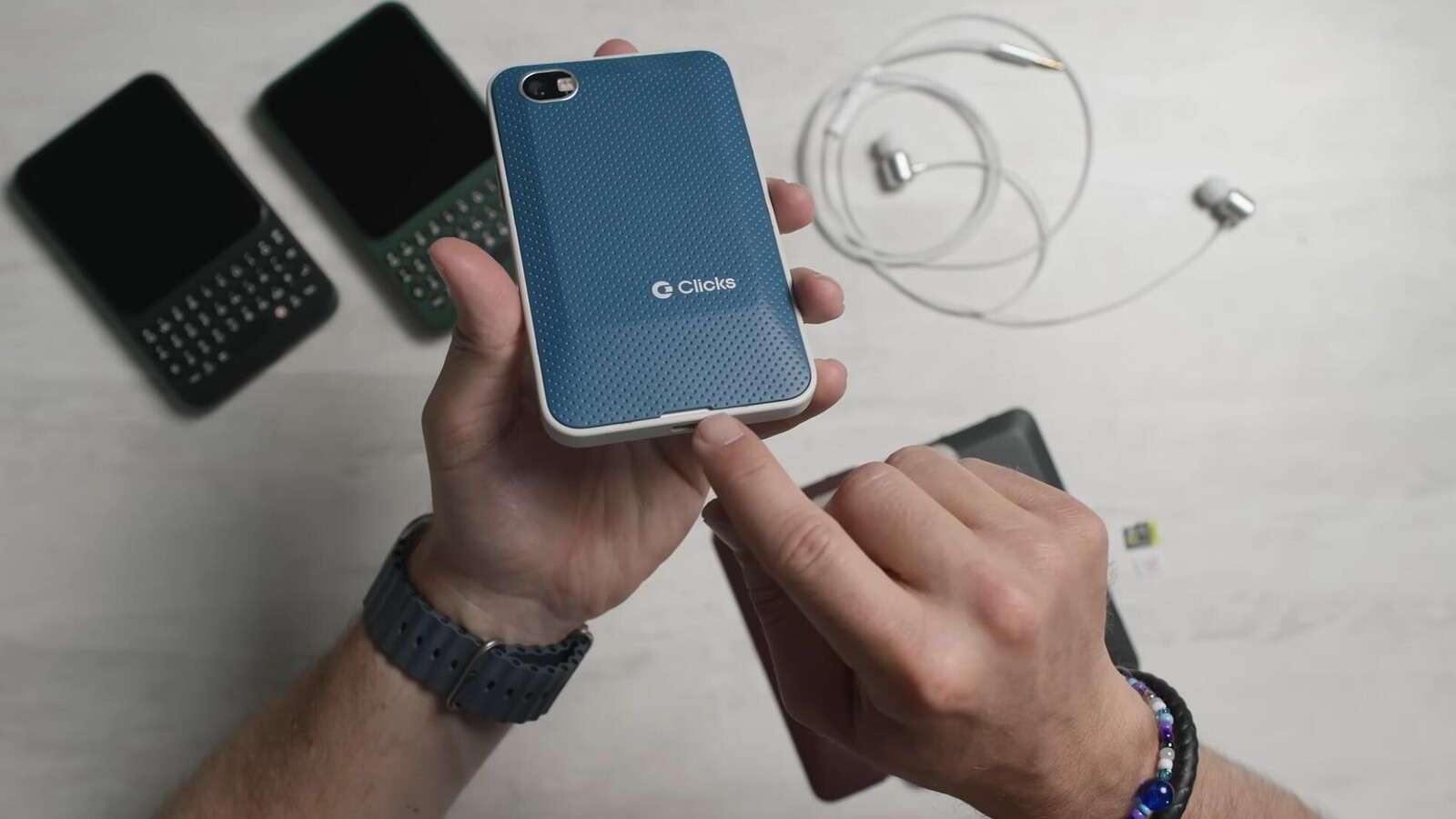
When we introduced Clicks Communicator earlier this year, we were excited to use a high-density silicon carbon chemistry with a 4,000 mAh capacity.
As we worked with our supply chain partners, we found that silicon carbon battery chemistry fails the currently employed battery tests at a significantly higher rate than the more common lithium ion batteries.
Battery testing follows standards that don't discriminate between battery chemistry compositions like lithium ion, lithium polymer or silicon carbon. During this independent third party testing, batteries are heated up, dropped, punctured and sliced in half.
Given their higher density design, silicon carbon batteries have been found to fail these tests at a higher rate than lithium ion. We saw this validated in our own third party testing. While the total failure rate was still quite low in the grand scheme of things, we were faced with a decision on whether to embrace the new, riskier technology (relatively speaking) or prioritize reliability and user safety. When we realized we also had the opportunity to deliver more capacity at the same time, the decision to move to lithium ion became an easy one.
In doing so, we were also able to increase the longevity of the Communicator battery by designing it to support more charge cycles.
A charge cycle is when you use a cumulative total of 100% of the battery's capacity. That could be all at once (draining it down to 0%) or across multiple partial days (5 days x 20% battery used equals 1 charge cycle).
The battery in Clicks Communicator has been rated for more than 800 charge cycles.
We're designing Communicator to be a phone that earns its place in your pocket for several years to come, not a phone you need to replace every one to two years.
Our goal with Communicator since day 1 has been to deliver an optimal experience, not simply tick boxes on a feature list. These battery decisions have been made with that goal in mind.
Read more
Big Updates for Clicks Communicator
Spec upgrades, new accessories, and more. Last chance to lock in the USD $499 launch price is September 30.
It’s time to configure your Clicks Communicator.
New configuration tool lets you preview colors, Covers, accessories and more…
dbrand is bringing two accessories to Communicator
MNML case and Prism screen protector available to add when you configure your Communicator.

Clicks Care: peace of mind for accidents
Accidental damage and extended warranty for Clicks Communicator